A good quiz question has a wrong answer you want to choose
Recognising an answer is not the same as knowing it. Why the wrong choices do the teaching, why feedback has to be fast, and how we built that into the HeyPapin board.
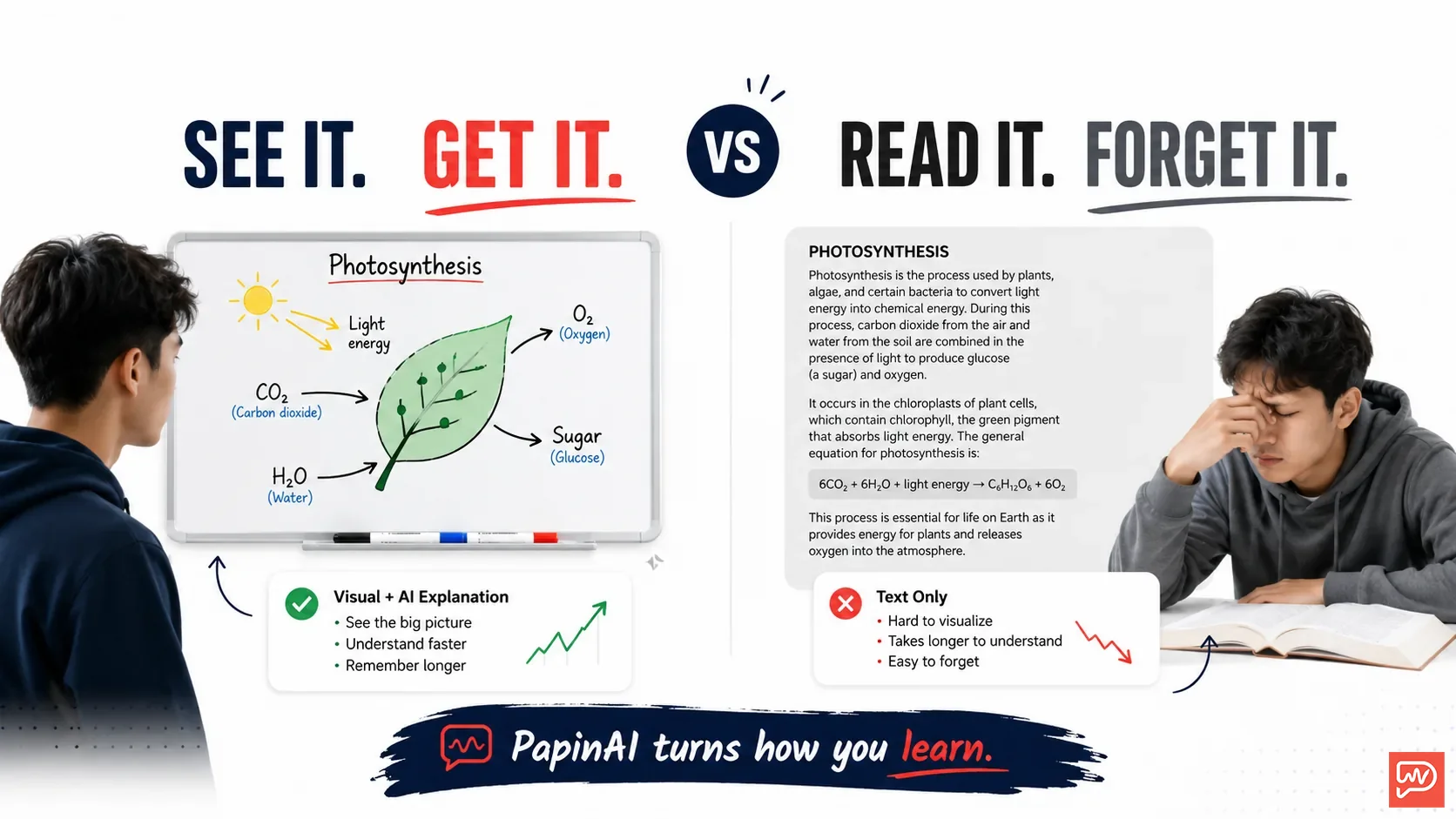
Most quiz questions are easy to write and almost useless. You read the question, spot the one answer that sounds like the lesson, and click it. You were right, you feel good, and you have learned nothing you did not already know.
A good question works differently. It has a wrong answer you actually want to choose.
Recognising is not the same as knowing
When you reread your notes, everything looks familiar. That familiarity feels like understanding, but it is only recognition. You can recognise a correct explanation without being able to produce it, and an exam asks you to produce it.
This is why testing yourself beats rereading. Pulling an idea out of memory strengthens it in a way that looking at it again does not. Researchers call this the testing effect, and it is one of the most reliable findings in the study of learning. However, it only works when the question makes you think. A question you can answer by matching words does not pull anything out of memory at all.
The wrong answers do the teaching
Take a simple question. It is summer in Australia. What season is it in Canada?
If the options are "winter", "Tuesday", and "purple", you will get it right and learn nothing. In contrast, look at these:
- Summer too
- Winter
- Spring
- There are no seasons there
"Summer too" is tempting if you believe the common idea that summer happens when the Earth is closer to the Sun. If that were true, the whole planet would have summer at once. Therefore, choosing between "summer too" and "winter" forces you to decide what actually causes seasons. The answer is the tilt of the Earth, not its distance from the Sun, and you only find that out by having to choose.
That is the job of a tempting wrong answer. It is not a trick. It is the misconception, written down, so that you can meet it and reject it on purpose.
Being wrong is useful, if you find out fast
Many people avoid questions because they do not like being wrong. But a wrong answer tells you something a right answer cannot: exactly where your picture of the subject differs from the real one.
The timing matters, though. If you answer today and see the result next week, the moment is gone. You no longer remember why you chose what you chose. Feedback helps most when it arrives while your reasoning is still in your head.
Furthermore, the feedback has to say more than "wrong". Knowing that B was correct does not help if you still think A made sense. You need to hear why A is tempting and where it breaks.
How we built this into Papin
We recently added multiple-choice questions to the HeyPapin board. Papin writes the question on the whiteboard with a few short choices under it, and you click one.
Three decisions came straight from the ideas above:
- One of the wrong choices is the common misconception. Papin is asked to write it that way, so the question tests the idea and not your ability to match words.
- The board marks your choice at once. Green if you were right, red if you were not, and the correct choice is always shown. You do not wait for anything.
- Then Papin explains why. If you chose wrong, it does not just repeat the right answer. It goes back to the part of the board that settles the question and walks through it.
You can still interrupt at any point and ask "but why not A?", and you can still type your own answer into a blank when a question has no fixed choices.
Try it on your own notes
You do not need an AI tutor to use this. The next time you study, write one question per page of notes, and for each question write the wrong answer you would have given a week ago. If you cannot think of a tempting wrong answer, you may not have found the hard part of the topic yet.
And if you would like a tutor that writes those questions for you, on a board, while it explains: that is what we are building.