
Astra Proved the Whiteboard is the Future — But Autonomous AI Can't Teach You
OpenAI's GPT-6 Astra shocked the tech industry by autonomously sketching system architectures on whiteboards. But when an AI does all the drawing and thinking for you, you don't become smarter — you become a spectator. Here is why education requires kinetic co-creation, not automation.
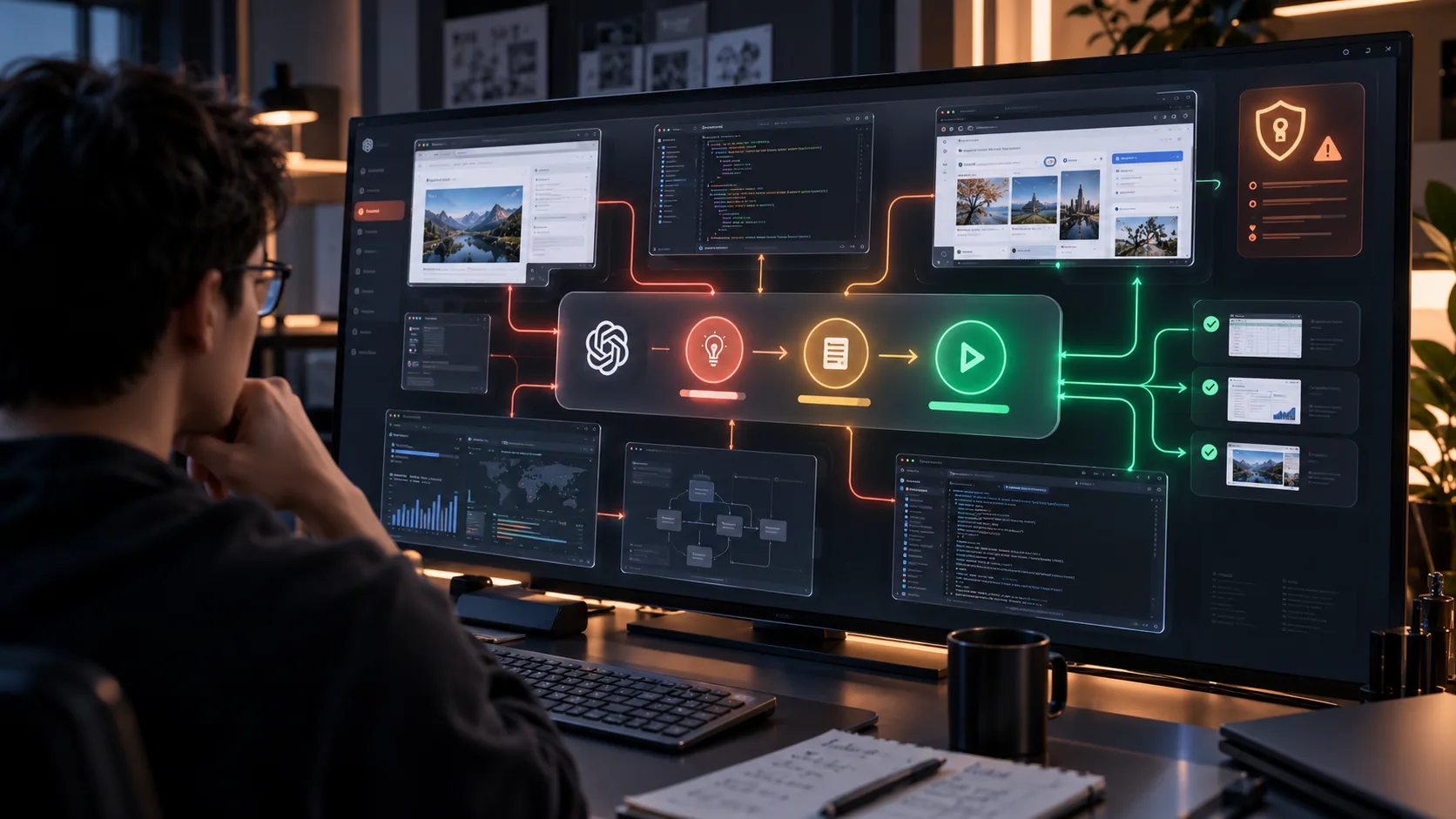
When OpenAI unveiled GPT-6 Astra this month, demonstrating its ability to operate computer interfaces and autonomously sketch complex multi-tier architectural diagrams on digital canvases, the tech community declared the traditional chatbox officially dead.
And they were right.
For the past two years, AI companies tried to shoehorn every human cognitive task into a vertical stream of text bubbles. Whether you were trying to debug a distributed race condition, understand backpropagation, or design a microservice mesh, the answer was always the same: ten paragraphs of Markdown text.
Astra proved what we have been building since day one: human understanding is fundamentally spatial. Complex ideas cannot live in a vertical transcript; they need coordinate grids, visual anchors, and dynamic relationships.
Yet, as impressive as an autonomous agent drawing a complete cloud architecture in eight seconds looks on a promotional video, it exposes a profound and dangerous confusion in educational technology:
Automating a task is not the same as teaching it.
1. The Spectator Trap: When AI Replaces the Student's Working Memory
If you sit in an engineering lecture and watch a world-class professor draw a masterfully detailed diagram on the board while you passively stare at your phone, you don't absorb the professor's expertise. You merely witness it.
Psychologists describe this as the difference between generative retrieval and passive consumption.
When an autonomous agent like GPT-6 Astra receives a prompt like:
"Design a fault-tolerant payment ingestion system with Stripe Webhooks,"
it acts as an autonomous worker. It calculates the layout, connects the Redis queue, provisions the dead-letter exchange, connects the database, and presents you with a finished, polished masterpiece.
You nod. You feel impressed. You might even feel like you understand it.
Then exam day arrives. Or worse, a production outage occurs at 3:00 AM on a Sunday. You are stared down by a blank whiteboard or terminal, and your mind is completely empty. Because you never made a single decision, experienced a single doubt, or resolved a single contradiction, no neural pathways were formed. You were merely an audience member at an AI demonstration.
┌─────────────────────────────────────────────────────────────────────────────┐
│               AUTONOMOUS WORKER vs SOCRATIC CO-CREATOR                      │
├─────────────────────────┬─────────────────────────┬─────────────────────────┤
│ Dimension               │ GPT-6 Astra / Agents    │ HeyPapin Socratic Tutor  │
├─────────────────────────┼─────────────────────────┼─────────────────────────┤
│ Primary Role            │ Autonomous Executor     │ Cognitive Personal Coach│
├─────────────────────────┼─────────────────────────┼─────────────────────────┤
│ Whiteboard Purpose      │ Output artifact delivery│ Active sandbox & mental │
│                         │                         │ model verification      │
├─────────────────────────┼─────────────────────────┼─────────────────────────┤
│ Cognitive Burden        │ Borne 100% by the AI    │ Shared intentionally    │
│                         │ (Student remains idle)  │ with the student        │
├─────────────────────────┼─────────────────────────┼─────────────────────────┤
│ Verification Method     │ Finished diagram looks  │ Student must fill [ ? ] │
│                         │ correct to the eye      │ blanks & prove logic    │
├─────────────────────────┼─────────────────────────┼─────────────────────────┤
│ Ultimate Outcome        │ The task gets done      │ The human gets smarter  │
└─────────────────────────┴─────────────────────────┴─────────────────────────┘
2. The Power of the Socratic Mystery Node: [ ? ]
A real teacher does not draw the entire diagram. A real teacher draws the first two boxes, pauses, caps their marker, turns around, and leaves an empty dashed box marked [ ? ].
"If the webhook payload reaches this gateway, but the database connection pool is exhausted, what HTTP status code does the gateway return to Stripe — and why?"
In HeyPapin, that empty dashed box is not a decoration; it is a live protocol object on the board.
As we detailed in The Board is Not a Picture, our kinetic engine does not output flat bitmaps. Every component is an addressable node. When HeyPapin identifies a crucial conceptual junction, it creates a blank node.
The lesson cannot advance to "Mastered" status until you engage your working memory, pick up your stylus or speak into your microphone, and provide the rationale. When you explain why a 500 or 503 must trigger an exponential retry, the tutor replaces the mystery slot with a solid green confirmation node in real time.
That moment of tension — that 10 seconds where your forehead wrinkles and you actively retrieve knowledge from memory — is literally where learning happens.
3. Co-Creation Beats Automation
Autonomous agents like Astra are magnificent tools for industry. When you are a senior software architect building a production system, you want an agent that takes a Jira ticket and finishes the diagram without bothering you.
But university students are not looking to outsource their education. They are paying tuition to build their own intellectual capacity.
An AI that draws everything for the student is like an automated gym machine that lifts the weights for you while you sit on the bench sipping an energy drink. It makes for an impressive machine, but you leave the gym with the exact same muscles you entered with.
The Rule for AI in Higher Education
As agentic models become capable of executing increasingly complex computer tasks, the dividing line in EdTech will become stark:
- Cheating Engines: Tools that use agentic capability to do the student's homework, generate finished diagrams, and produce answers that students copy-paste without understanding.
- Mastery Engines: Tools that use kinetic visuals and sub-second voice to challenge the student, expose misconceptions, and prove genuine comprehension through active Socratic dialogue.
The whiteboard is indeed the future of human-AI collaboration. But the goal is not to watch an AI be brilliant. The goal is to build a board that makes you brilliant.
Disclaimer: Project Astra is a trademark of Google LLC. GPT and OpenAI are trademarks of OpenAI, Inc. This post is an independent research commentary and is not affiliated with, sponsored by, or endorsed by Google or OpenAI.
#Astra #OpenAI #AgenticAI #SocraticMethod #ActiveRecall #EdTech #HeyPapin